What Snakes & Ladders: Online Dice! actually does (from store listing)
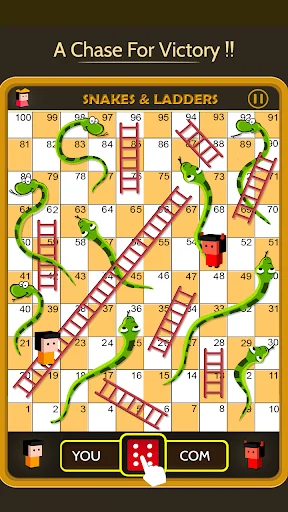
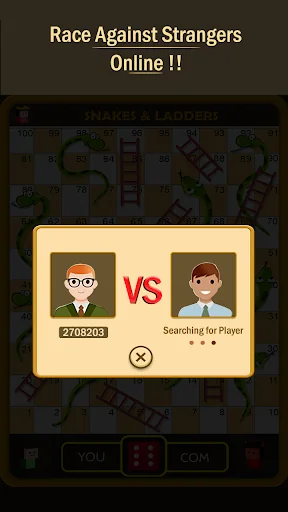
Snakes and Ladders is an ancient Indian Dice rolling board game regarded today as a worldwide classic. It is played between two or more players on a game board having numbered, gridded squares. A number of "ladders" and "snakes" are pictured on the board, each connecting two specific board squares. The object of the game is to navigate one's game piece, according to the dice roll, from the start (bottom square) to the finish (top square), helped or hindered by ladders and snakes respectively.
T…
Snakes and Ladders is an ancient Indian Dice rolling board game regarded today as a worldwide classic. It is played between two or more players on a game board having numbered, gridded squares. A number of "ladders" and "snakes" are pictured on the board, each connecting two specific board squares. The object of the game is to navigate one's game piece, according to the dice roll, from the start (bottom square) to the finish (top square), helped or hindered by ladders and snakes respectively.
This Dice game is a simple race contest based on sheer luck and is popular with young kids. The historic version had root in morality lessons, where a player's progression up the board represented a life journey complicated by virtues (ladders) and vices (snakes).
The AI behind the Snakes and Ladder’s game is completely built by keeping-in-mind that the outcome of dice is always random and unpredictable whether it is thrown by the player or AI.
We have brought in a ground-up engine for dice throwing mechanics which will simulate the real-time dice throwing/flinging or tossing effect.
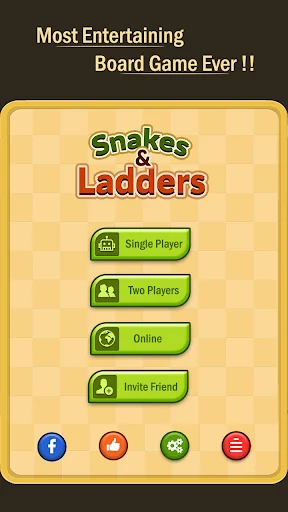
Online Multiplayer:
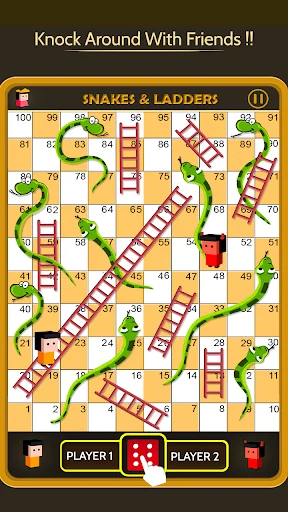
Google Play Game Services has been integrated into the ludo game, which means you can log in with Google Play app, or with your Google Plus account. Play with your friends, family or a random player. You have the option to see the invites from your friends, family, and anyone in your google plus circles.
History:
Snakes and Ladders originated in India as part of a family of dice board games. The game made its way to England and was sold as "Snakes and Ladders", then the basic concept was introduced in the United States as Chutes and Ladders (an "improved new version of England's famous indoor sport”) by game pioneer Milton Bradley in 1943.
The phrase "back to square one" originates in the game of snakes and ladders, or at least was influenced by it – the earliest attestation of the phrase refers to the game: "Withal he has the problem of maintaining the interest of the reader who is always being sent back to square one in a sort of intellectual game of snakes and ladders.
Note: Advertisements are strategically placed so you can have nondisruptive Gameplay.
Support and Feedback
If you have any technical problems (or) payment related questions please email us at support@hashcube.com
Comparable Android apps
The five apps in Board with the closest revenue to Snakes & Ladders: Online Dice!. Click any to see its detail page.
Each forecast combines App Store rating, ratings count, monetisation model, pricing tier, IAP signals and ad-supported flag.
The base estimate is then multiplied by a per-category scaling factor learned from apps with founder-verified MRR.
Every number on this page comes from public APIs and bumetric's own snapshot history.
Full methodology covers input variables, accuracy bands per category and how we treat apps without comparable anchors.
See also the live data on Snakes & Ladders: Online Dice!'s tracker page for current rating, reviews and snapshot timeline.
Building something similar? Get a free AI audit with $-revenue forecasts for every recommendation.

 Checkers - Offline
 Classic Bingo Touch
 Word Finder: Anagram Solver
 Alchemists: Lab Equipment
 Cultura Chupistica