
KJV Bible with Apocrypha. KJVA
 74
74


KJV Bible with Apocrypha. KJVA is an iOS app from Oleg Shukalovich in the Food & Drink category, currently rated 4.9★ across 10,214 ratings. Initial signal reads as mixed reviews: supporters praise core features while critics cite stability and value gaps.
Quality Score is 74: Strong (healthy traction). For a Food & Drink app, that means healthy traction. The full BU Investment Matrix below scores 8 dimensions including monetisation, growth, and operational risk.
Track changes month-over-month in the Performance section below: live snapshot history and revenue forecast included.
- Title & subtitle keyword fit
- Description hook & conversion structure
- Screenshots, ratings, reviews strategy
📊 Performance Tracking LIVE
Synthetic estimate. Inputs: category complexity, file size, screen count, monetization layer, platform reach, age × team-size proxy. Calibrated against 2024-2026 indie-agency rate surveys. Full math + source list on /methodology.
| 🧱 MVP baseline (design + 1-store ship) | +$28K |
| 📱 5 unique screens × $4.5K | +$22K |
| ⚙ Food & Drink complexity ×1.10 | +$5K |
| ⚙ 11.5y maintenance × ~1-person team | +$69K |
Synthetic estimate. Multiple band derived from ad-supported + age, rating quality, category demand, and user-base maturity. Calibrated against 2024-2026 indie-app-marketplace closed-deal medians. Full math + comparable deal list on /methodology.
| 📺 Ad-supported base | 15× MRR |
| 📅 11.5y proven track record | +20% |
| ⭐ ★ rating ≥ 4.7 (premium) | +15% |
Synthetic estimate from ratings × category benchmarks. Calibrated against 2024-2026 mobile-attribution retention + DAU/MAU reports. Numbers are US-storefront-equivalent — true global audience can be 5-10× larger for international apps. Full math + source list on /methodology.
| 📲 Food & Drink engagement | ~100 installs / rating |
| 📅 11.5y of rating accumulation | -30% |
| 🔁 Food & Drink D30 retention | 14% |
| 📍 DAU / MAU stickiness | 0.20 |
Heuristic guess from app bundle size, category, store description signals, and release-date stack era. Bumetric does not disassemble binaries — for binary-level certainty you would need an SDK intelligence tool or the manifest itself. Reasoning chain on the right. Full ruleset on /methodology.
| 📦 App bundle size | 15 MB |
| 🏷 Category context | Food & Drink |
| 📦 Compact iOS bundle | → Native Swift / UIKit (pre-2020 era) |
Heuristic risk score from time-since-last-update + ratings velocity proxy + Editor's Choice / curated featuring signals. Calibrated against 2024-2025 app-store ranking decay reports. Not a guarantee — a quiet app with a healthy codebase looks the same as an abandoned one until something breaks. Full math on /methodology.
| 📅 1y 1mo since last update | Likely deprioritized |
| • 12y old + 1y+ no update | +5% (API deprecation drift) |
How we forecast this revenue
MEDIUM CONFIDENCEBU Investment Matrix
Mixed signals · 58/100BIG TIERcompetitive but cautious- 💰 Revenue: Healthy — $880K - $4840K/mo · BIG tier · medium-low confidence, trajectory unclear.
- ⭐ Quality: 4.86★ across 10,214 reviews — exceptional (top 1% in category).
- 📍 Market: Not yet charting in any of the 9 monitored markets.
- 📈 Growth: ⚠ last update 405d ago — possibly dormant.
- ⚠️ Risk: Moderate — dormant (405d since update).
💰 Forecast Revenue / mo
MODEL| Mid install base (10,214 ratings)METRIC | +$5,500 | |
| Excellent rating (4.9★)METRIC | +$2,200 | |
| bugsREVIEW | −$1,800 | |
| 5 starREVIEW | +$1,800 | |
| excellent appREVIEW | +$1,500 | |
| Mature app (11y old)METRIC | +$1,500 | |
| highly recommendREVIEW | +$1,400 | |
| slowREVIEW | −$1,200 | |
| Ad-supported / freemiumMETRIC | +$600 |
📈 Reviews Growth
LIVE⭐ Rating Trend
LIVE🆕 What's New · v5.2
Profile & Insights
Identification
- App name
- KJV Bible with Apocrypha. KJVA
- Developer
- Oleg Shukalovich
- Bundle ID
- english.book.KJVA-Bible
- App Store URL
- Open in App Store
- Category
- Food & Drink
- Content rating
- 4+
- Languages
- EN, FR, PT, ES
Company
- Website
- Not found
- Tagline
- Today
- Description
- Find apps and games for iPhone, iPad, Mac, and more on the App Store.
- Founded
- Not found
- HQ / Address
- Not found
- Employees
- Not found
- Logo
- Available
Revenue
- Reported revenue signal / mo
- Not found
- AI revenue estimate / mo
- Not found
- AI annual estimate
- Not found
- Model estimate / mo
- $2.2M/mo
- Top-grossing rank
- Outside top 100 in US Food & Drink
- All-time revenue
- Not found
- Pricing
- Not found
Founder
Funding
Press & Links
Contacts & Socials
📈Ratings growth10,457 ratings+2372% lifetimeShow 3-year history estimate ▾
📝 About this app
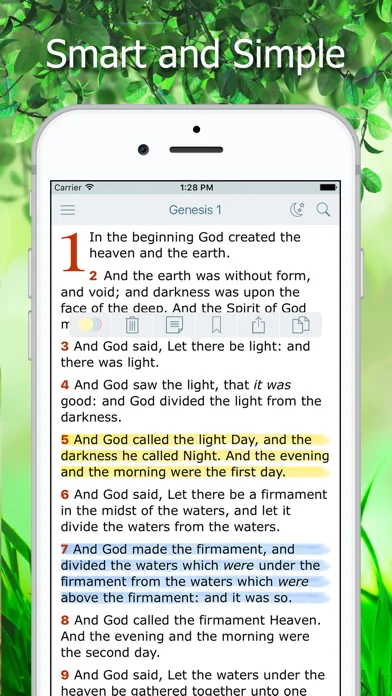
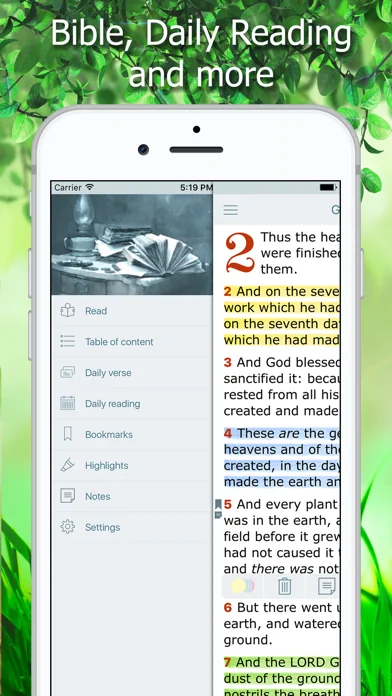
The King James Version (KJV), commonly known as the Authorized Version (AV) or King James Bible (KJB), is an English translation of the Christian Bible for the Church of England begun in 1604 and completed in 1611. First printed by the King's Printer Robert Barker, this was the third translation into English to be approved by the English Church authorities.… View full description on the official store →
What Worked™ · Development Pipeline
15 EVENTS TRACKEDMulti-Country Performance
Available in 9 of 9 monitored markets| Market | Rating | Reviews | Current version |
|---|---|---|---|
| 🇺🇸 US | 4.85497★ | 10,501 | 4.85497★ this version |
| 🇬🇧 GB | 4.82792★ | 308 | 4.82792★ this version |
| 🇩🇪 DE | 4.94444★ | 18 | 4.94444★ this version |
| 🇫🇷 FR | 4.75★ | 8 | 4.75★ this version |
| 🇯🇵 JP | 5★ | 8 | 5★ this version |
| 🇨🇦 CA | 4.76129★ | 310 | 4.76129★ this version |
| 🇦🇺 AU | 4.71739★ | 92 | 4.71739★ this version |
| 🇧🇷 BR | 5★ | 2 | 5★ this version |
| 🇮🇳 IN | 4.8★ | 5 | 4.8★ this version |
Track this app’s revenue
FREE📝 Description
95
More by Oleg Shukalovich
View all →



Why high confidence: 10,214 ratings · no founder-verified revenue (model estimate only).