
PlantNet
 75
75


PlantNet
PlantNet is an iOS app from Cirad-France in the Education category, currently rated 4.6★ across 6,983 ratings. Initial signal reads as mixed reviews: supporters praise core features while critics cite stability and value gaps.
Quality Score is 75: Strong (healthy traction). For a Education app, that means healthy traction. The full BU Investment Matrix below scores 8 dimensions including monetisation, growth, and operational risk.
Track changes month-over-month in the Performance section below: live snapshot history and revenue forecast included.
- Title & subtitle keyword fit
- Description hook & conversion structure
- Screenshots, ratings, reviews strategy
📊 Performance Tracking LIVE
Synthetic estimate. Inputs: category complexity, file size, screen count, monetization layer, platform reach, age × team-size proxy. Calibrated against 2024-2026 indie-agency rate surveys. Full math + source list on /methodology.
| 🧱 MVP baseline (design + 1-store ship) | +$28K |
| 📱 5 unique screens × $4.5K | +$22K |
| 📦 Asset bundle (80 MB) | +$11K |
| ⚙ Education complexity ×1.20 | +$12K |
| ⚙ 13.6y maintenance × ~1-person team | +$81K |
Synthetic estimate. Multiple band derived from ad-supported + age, rating quality, category demand, and user-base maturity. Calibrated against 2024-2026 indie-app-marketplace closed-deal medians. Full math + comparable deal list on /methodology.
| 📺 Ad-supported base | 15× MRR |
| 📅 13.6y proven track record | +20% |
| ⭐ ★ rating ≥ 4.4 (solid) | +8% |
| 🏷 Education category multiple | +6% |
Synthetic estimate from ratings × category benchmarks. Calibrated against 2024-2026 mobile-attribution retention + DAU/MAU reports. Numbers are US-storefront-equivalent — true global audience can be 5-10× larger for international apps. Full math + source list on /methodology.
| 📲 Education engagement | ~85 installs / rating |
| 📅 13.6y of rating accumulation | -30% |
| 🔁 Education D30 retention | 18% |
| 📍 DAU / MAU stickiness | 0.30 |
Heuristic guess from app bundle size, category, store description signals, and release-date stack era. Bumetric does not disassemble binaries — for binary-level certainty you would need an SDK intelligence tool or the manifest itself. Reasoning chain on the right. Full ruleset on /methodology.
| 📦 App bundle size | 80 MB |
| 🏷 Category context | Education |
| 📦 Small-mid iOS bundle | → Native Swift / UIKit (pre-2020 era) |
Heuristic risk score from time-since-last-update + ratings velocity proxy + Editor's Choice / curated featuring signals. Calibrated against 2024-2025 app-store ranking decay reports. Not a guarantee — a quiet app with a healthy codebase looks the same as an abandoned one until something breaks. Full math on /methodology.
| 📅 65 days since last update | Healthy release cadence |
How we forecast this revenue
MEDIUM CONFIDENCEBU Investment Matrix
Below median · 50/100MID TIERunderperforming peers- 💰 Revenue: Modest — $3K - $7K/mo · MID tier · medium confidence, trajectory unclear.
- ⭐ Quality: 4.59★ across 6,983 reviews — strong (top 10%).
- 📍 Market: Not yet charting in any of the 9 monitored markets.
- 📈 Growth: Insufficient signal to assess trajectory.
- ⚠️ Risk: Low — no material risk signals detected.
💰 Forecast Revenue / mo
MODEL| Excellent rating (4.6★)METRIC | +$2,200 | |
| 5 starREVIEW | +$1,800 | |
| excellent appREVIEW | +$1,500 | |
| Low install base (6,983 ratings)METRIC | +$1,500 | |
| Mature app (13y old)METRIC | +$1,500 | |
| Multilingual (41 languages)METRIC | +$1,500 | |
| highly recommendREVIEW | +$1,400 | |
| slowREVIEW | −$1,200 | |
| Ad-supported / freemiumMETRIC | +$600 |
📈 Reviews Growth
LIVE⭐ Rating Trend
LIVE🆕 What's New · v3.26.10
Profile & Insights
Identification
- App name
- PlantNet
- Developer
- Cirad-France
- Bundle ID
- org.plantnetproject.PlantNet
- App Store URL
- Open in App Store
- Category
- Education
- Content rating
- 9+
- Languages
- AR, EU, BN, BG, CA, HR, CS, DA, NL, EN, EO, ET, FI, FR, GL, DE, EL, HE, HI, HU, ID, IT, JA, MS, ML, NB, FA, PL, PT, RO, RU, ZH, SK, SL, ES, SV, ZH, TR, UK, UR, CY
Company
- Website
- Not found
- Tagline
- Today
- Description
- Find apps and games for iPhone, iPad, Mac, and more on the App Store.
- Founded
- Not found
- HQ / Address
- Not found
- Employees
- Not found
- Logo
- Available
Revenue
- Reported revenue signal / mo
- Not found
- AI revenue estimate / mo
- Not found
- AI annual estimate
- Not found
- Model estimate / mo
- $5.0K/mo
- Top-grossing rank
- Outside top 100 in US Education
- All-time revenue
- Not found
- Pricing
- Not found
Founder
Funding
Press & Links
Contacts & Socials
📈Ratings growth7,044 ratings+1476% lifetimeShow 3-year history estimate ▾
📝 About this app
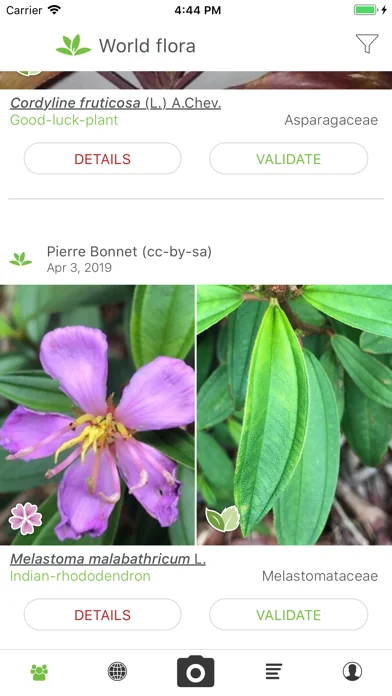
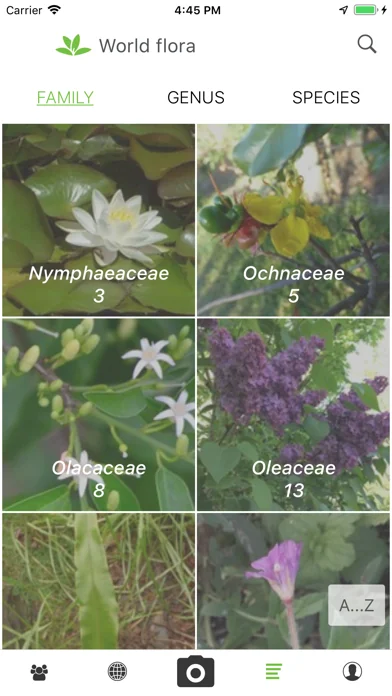
Pl@ntNet is also a great citizen science project: all the plants you photograph are collected and analysed by scientists around the world to better understand the evolution of plant biodiversity and to better preserve it.
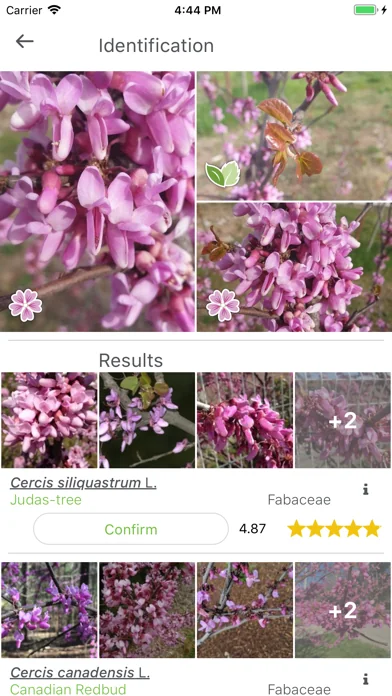
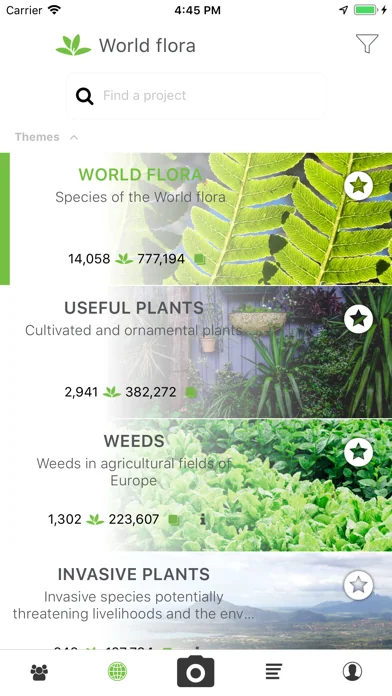
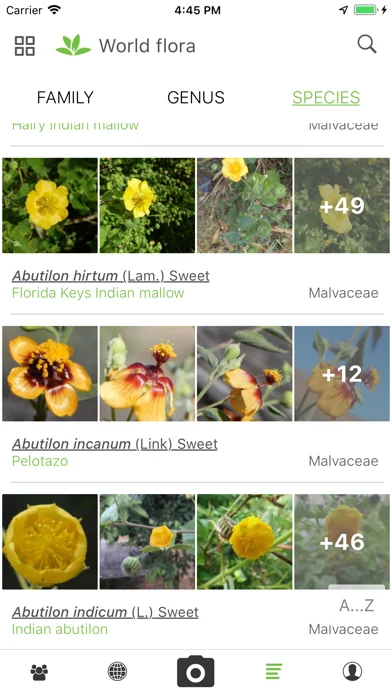
Pl@ntNet allows you to identify and better understand all kinds of plants living in nature: flowering plants, trees, grasses, conifers, ferns, vines, wild salads, cacti (and many more).… View full description on the official store →
What Worked™ · Development Pipeline
12 EVENTS TRACKEDTech & Domain Intel — plantnet.org
- Tech stack
- Google Workspace
Multi-Country Performance
Available in 9 of 9 monitored markets| Market | Rating | Reviews | Current version |
|---|---|---|---|
| 🇦🇺 AU | 4.51064★ | 611 | 4.51064★ this version |
| 🇧🇷 BR | 4.71617★ | 909 | 4.71617★ this version |
| 🇨🇦 CA | 4.55877★ | 1,276 | 4.55877★ this version |
| 🇩🇪 DE | 4.6249★ | 4,772 | 4.6249★ this version |
| 🇫🇷 FR | 4.63008★ | 9,921 | 4.63008★ this version |
| 🇬🇧 GB | 4.71612★ | 2,413 | 4.71612★ this version |
| 🇮🇳 IN | 4.62411★ | 141 | 4.62411★ this version |
| 🇯🇵 JP | 4.02778★ | 72 | 4.02778★ this version |
| 🇺🇸 US | 4.59152★ | 7,048 | 4.59152★ this version |
Track this app’s revenue
FREE📝 Description
95


Why medium confidence: 6,983 ratings · no founder-verified revenue (model estimate only).