77
BU Score
Strong
PlantNet Plant Identification
✍️ BU Analytics Review
“
PlantNet Plant Identification is an Android app from PlantNet in the Education category, currently rated 4.5★ across 260,163 ratings. Initial signal reads as mixed reviews — supporters praise core features while critics cite stability/value gaps.
Our BU Score puts it at 77 — Strong (healthy traction). For a Education app, that means healthy traction.
Track changes month-over-month in the Performance section below — live snapshot history and revenue forecast included.
creator
📊 Performance Tracking LIVE
Loading…
Rating
—
Reviews
—
Forecast Revenue / mo
—
Snapshots tracked
0
since first record
Range:
💰 Forecast Revenue / mo
MODELRevenue forecast computed from BU's 234 trigger model on each snapshot. Calibrated against ground-truth from 58 verified-revenue apps.
🔬Forecast Breakdown — Why This Estimate?Top 3 of 3 triggers
Our ML model uses 200+ signals from public data. These are the most influential for this app:
| High install base (260,163 ratings)METRIC | +$12,000 | |
| Excellent rating (4.5★)METRIC | +$2,200 | |
| Ad-supported / freemiumMETRIC | +$600 |
METRIC = structural app data · REVIEW = mined from user reviews · ✓ VERIFIED = Stripe-verified anchor (TrustMRR)
📈 Reviews Growth
LIVECumulative review count from first BU snapshot. Each point = a tracked update.
⭐ Rating Trend
LIVEAverage rating evolution. Updates with each new review batch.
🗓️ Snapshot Timeline
HISTORYEach bar shows a tracked update and the metric delta from the previous snapshot.
App Specs
🔐 Own this app? Claim & verify MRR →🔖 v3.25.3🔄 updated 2mo ago📂 Education💰 Free
📝 About this app
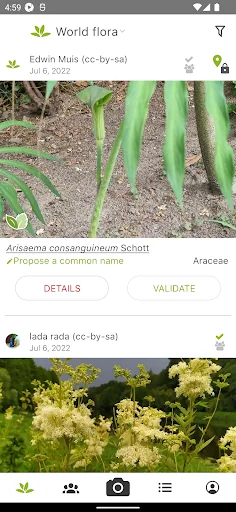
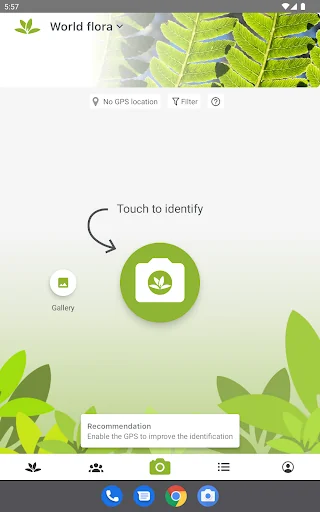
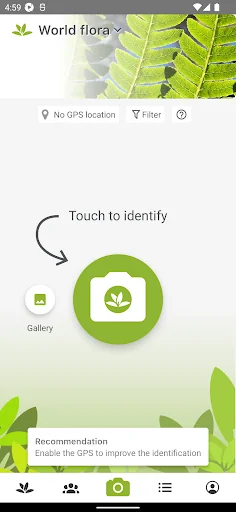
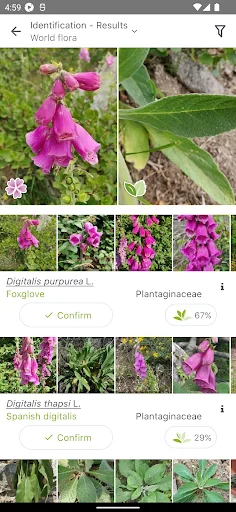
Pl@ntNet is an application that allows you to identify plants simply by photographing them with your smartphone. Very useful when you don't have a botanist on hand! Pl@ntNet is also a great citizen science project: all the plants you photograph are collected and analysed by scientists around the world to better understand the evolution of plant biodiversity and to better preserve it.
Pl@ntNet allows you to identify and better understand all kinds of plants living in nature: flowering plants, trees, grasses, conifers, ferns, vines, wild salads or cacti. Pl@ntNet can also identify a large number of cultivated plants (in parks and gardens) but this is not its primary purpose. We especially need Pl@ntNet’s users to inventory the wild plants, those that you can observe in nature of course but also those that grow on the sidewalks of our cities or in the middle of your vegetable garden!
The more visual information you give to Pl@ntNet about the plant you are observing, the more accurate the identification will be. There are indeed many plants that look alike from afar and it is sometimes small details that distinguish two species of the same genus. Flowers, fruits and leaves are the most characteristic organs of a species and it is them that should be photographed first. But any other detail can be useful, such as thorns, buds or hair on the stem. A photograph of the whole plant (or the tree if it is one!) is also very useful information, but it is often not sufficient to allow a reliable identification.
At present Pl@ntNet makes it possible to recognize about 20,000 species. We are still a long way from the 360,000 species living on earth, but Pl@ntNet is getting richer every day thanks to the contributions of the most experienced users among you. Don't be afraid to contribute yourself! Your observation will be reviewed by the community and may one day join the photo gallery illustrating the species in the application.
The new version of Pl@ntNet released in January 2019 includes many improvements and new features:
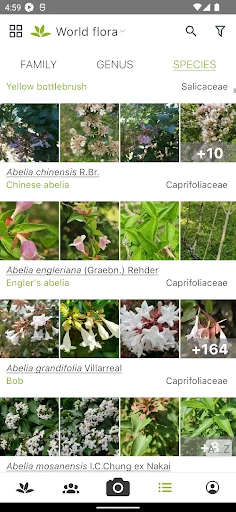
- The ability to filter recognized species by genus or family.
- The differentiated data revision that gives more weight to users who have demonstrated the most skills (in particular the number of species observed, validated by the community).
- The re-identification of shared observations, whether yours or those of other users of the application.
- The multi-flora identification that allows you to search for the photographed plant in all the flora of the application and not only in the one you have selected. Very useful when you are not sure what flora to look for.
- The selection of your favorite floras to access them more quickly.
- The navigation at different taxonomic levels in image galleries.
- The mapping of your observations.
- Links to many factsheets.
The web version of the application is also available at the following address: https://identify.plantnet.org/
Pl@ntNet allows you to identify and better understand all kinds of plants living in nature: flowering plants, trees, grasses, conifers, ferns, vines, wild salads or cacti. Pl@ntNet can also identify a large number of cultivated plants (in parks and gardens) but this is not its primary purpose. We especially need Pl@ntNet’s users to inventory the wild plants, those that you can observe in nature of course but also those that grow on the sidewalks of our cities or in the middle of your vegetable garden!
The more visual information you give to Pl@ntNet about the plant you are observing, the more accurate the identification will be. There are indeed many plants that look alike from afar and it is sometimes small details that distinguish two species of the same genus. Flowers, fruits and leaves are the most characteristic organs of a species and it is them that should be photographed first. But any other detail can be useful, such as thorns, buds or hair on the stem. A photograph of the whole plant (or the tree if it is one!) is also very useful information, but it is often not sufficient to allow a reliable identification.
At present Pl@ntNet makes it possible to recognize about 20,000 species. We are still a long way from the 360,000 species living on earth, but Pl@ntNet is getting richer every day thanks to the contributions of the most experienced users among you. Don't be afraid to contribute yourself! Your observation will be reviewed by the community and may one day join the photo gallery illustrating the species in the application.
The new version of Pl@ntNet released in January 2019 includes many improvements and new features:
- The ability to filter recognized species by genus or family.
- The differentiated data revision that gives more weight to users who have demonstrated the most skills (in particular the number of species observed, validated by the community).
- The re-identification of shared observations, whether yours or those of other users of the application.
- The multi-flora identification that allows you to search for the photographed plant in all the flora of the application and not only in the one you have selected. Very useful when you are not sure what flora to look for.
- The selection of your favorite floras to access them more quickly.
- The navigation at different taxonomic levels in image galleries.
- The mapping of your observations.
- Links to many factsheets.
The web version of the application is also available at the following address: https://identify.plantnet.org/
Profile & Insights
Everything we know — and don't — about this app and its company.
Identification
- App name
- PlantNet Plant Identification
- Developer
- PlantNet
- Bundle ID
- org.plantnet
- App Store URL
- Open in App Store
- Category
- Education
- Content rating
- Not found
- Languages
- Not found
Company
- Website
- Not found
- Tagline
- Not found
- Description
- Not found
- Founded
- Not found
- HQ / Address
- Not found
- Employees
- Not found
- Logo
- Not found
Revenue
- Verified revenue / mo
- Not found
- AI revenue estimate / mo
- Not found
- AI annual estimate
- Not found
- ML model estimate / mo
- $2.9K/mo
- Top-grossing rank
- Not found
- All-time revenue
- Not found
- Pricing
- Not found
Founder
- Name
- Not found
- X / Twitter
- Not found
- Not found
- GitHub
- Not found
- X followers
- Not found
- Public statements
- Not found
Funding
- Total raised
- Not found
- Last round
- Not found
- Investors
- Not found
- Crunchbase
- Not found
- AngelList
- Not found
Press & Links
- Articles found
- Not found
- Listed on
- Not found
- Blog
- Not found
- Press / News
- Not found
Contacts & Socials
- Socials
- Not found
- Not found
- Phone
- Not found
- Contact page
- Not found
- About page
- Not found
Profile is built from iTunes Lookup + developer site scrape + ML revenue model. Empty fields show "Not found" — additional sources (Crunchbase, X, IndieHackers, Acquire.com) coming.
More Education
Duolingo – Sprachkurse
★ 4.7 · 5,156,487 reviews
ClassDojo
★ 4.7 · 3,861,803 reviews
Canvas by Instructure
★ 4.7 · 2,769,210 reviews
Remind: School Communication
★ 4.8 · 1,742,504 reviews
Gauth: AI Study Companion
★ 4.8 · 1,418,613 reviews
Quizlet: More than Flashcards
★ 4.8 · 1,074,494 reviews
PictureThis - Plant Identifier
★ 4.8 · 1,061,649 reviews
ABCmouse Classic
★ 4.5 · 993,689 reviews
Browse BU Analytics
📚 All 55,000+ Books
🜍 Alchemy & Hermeticism
🔮 Magic & Ritual
🌙 Witchcraft & Paganism
⭐ Astrology & Cosmology
🃏 Divination & Tarot
📜 Education
✡️ Kabbalah & Jewish Mysticism
🕉️ Mysticism & Contemplation
🕊️ Theosophy & Anthroposophy
🏛️ Freemasonry & Secret Societies
👻 Spiritualism & Afterlife
📖 Sacred Texts & Gnosticism
👁️ Supernatural & Occult Fiction
🧘 Spiritual Development
📚 Esoteric History & Biography
Info
About BU Analytics