Home ›
All Android Apps ›
詩經 revenue
~481/mo
ML revenue forecast.
Calibrated against 63594 apps in this category.
Confidence band
±15%
High — many comparable apps with verified data
At a glance
Earns 2.33× more than the category median (206/mo). Ranks #8,186 of 63,594 in Books & Reference (top 12.9% by revenue).
Launched Apr 11, 2017 · last updated Feb 03, 2025.
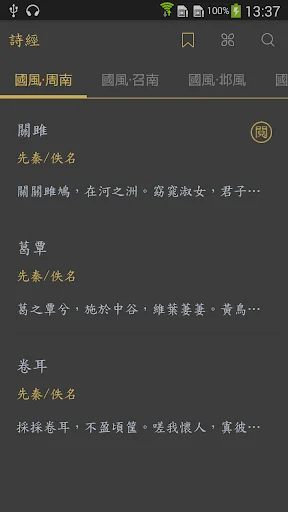
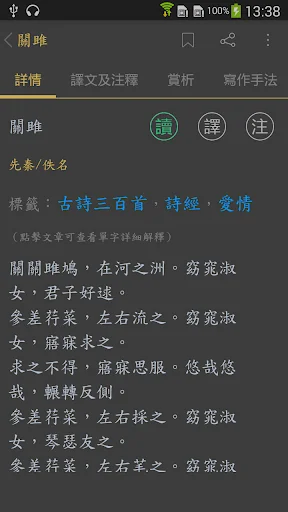
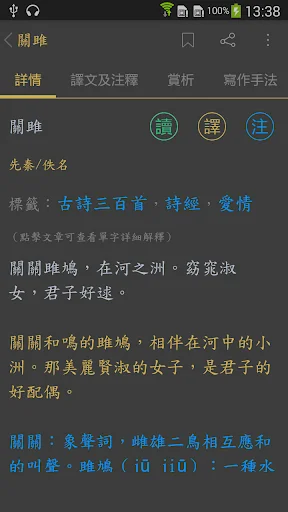
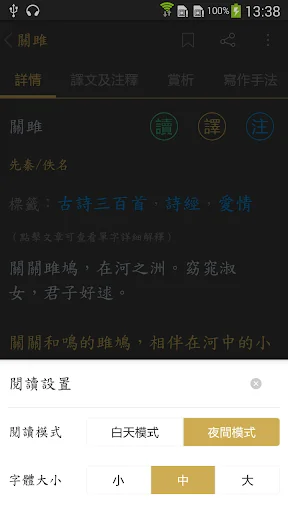
What the app looks like
Live screenshots from the Play Store, captured by our snapshot worker. Tap any image to enlarge.
詩經's revenue trajectory
Forecast revenue from snapshot history. Last 1 months.
Where 詩經 sits in Books & Reference
Revenue distribution of 63594 comparable apps. 詩經 highlighted.
詩經 vs comparable apps
Revenue trajectory side-by-side. Bold = 詩經, ghosted = peers.
App spec
What 詩經 actually does (from store listing)
『詩經』是中國古代詩歌開端,最早的一部詩歌總集,收集了西周初年至春秋中葉(前11世紀至前6世紀)的詩歌,共311篇,其中6篇為笙詩,即只有標題,沒有內容,稱為笙詩六篇(南陔、白華、華黍、由康、崇伍、由儀),反映了周初至周晚期約五百年間的社會面貌。
『詩經』的作者佚名,絕大部分已經無法考證,傳為尹吉甫採集、孔子編訂。『詩經』在先秦時期稱為『詩』,或取其整數稱『詩三百』。西漢時被尊為儒家經典,始稱『詩經』,並沿用至今。詩經在內容上分為『風』、『雅』、『頌』三個部分。『風』是周代各地的歌謠;『雅』是周人的正聲雅樂,又分『小雅』和『大雅』;『頌』是周王庭和貴族宗廟祭祀的樂歌,又分為『周頌』、『魯頌』和『商頌』。
孔子曾概括『詩經』宗旨為“無邪”,並教育弟子讀『詩經』以作為立言、立行的標準。先秦諸子中,引用『詩經』者頗多,如孟子、荀子、墨子、莊子、韓非子等人在說理論證時,多引述『詩經』中的句子以增強說服力。至漢武帝時,『詩經』被儒家奉為經典,成為『六經』及『五經』之一。
『詩經』內容豐富,反映了勞動與愛情、戰爭與徭役、壓迫與反抗、風俗與婚姻、祭祖與宴會,甚至天象、地貌、動物、植物等方方面面…
Read full description →
『詩經』是中國古代詩歌開端,最早的一部詩歌總集,收集了西周初年至春秋中葉(前11世紀至前6世紀)的詩歌,共311篇,其中6篇為笙詩,即只有標題,沒有內容,稱為笙詩六篇(南陔、白華、華黍、由康、崇伍、由儀),反映了周初至周晚期約五百年間的社會面貌。
Comparable Android apps
The five apps in Books & Reference with the closest revenue to 詩經. Click any to see its detail page.
Own 詩經? Replace our estimate with your real revenue via Stripe Connect or ASC. Get a public Verified badge.
Claim & verify →
How we calculated this
Each forecast combines App Store rating, ratings count, monetisation model, pricing tier, IAP signals and ad-supported flag.
The base estimate is then multiplied by a per-category scaling factor learned from apps with founder-verified MRR.
Every number on this page comes from public APIs and bumetric's own snapshot history.
Full methodology covers input variables, accuracy bands per category and how we treat apps without comparable anchors.
See also the live data on 詩經's tracker page for current rating, reviews and snapshot timeline.
Building something similar? Get a free AI audit with $-revenue forecasts for every recommendation.
Audit my app →


 The Names of Allah
 Holy Quran Dual Page IndoPak15
 呪文集
呪文集
 English French Translator
 Bible de Jérusalem catholique