What CREDO Detector actually does (from store listing)
What is CREDO Science?
Cosmic-Ray Extremely Distributed Observatory (CREDO) — Citizen Science collaborative project which enables a strategy for a global analysis of cosmic-ray data to reach the sensitivity to extremely extended cosmic-ray phenomena, we call them Cosmic-Ray Ensembles (CRE), invisible for individual detectors or observatories. So far, the cosmic-ray research has been oriented on detecting single air showers only, while the search for CRE is a scientific terra incognita. We aim …
What is CREDO Science?
Cosmic-Ray Extremely Distributed Observatory (CREDO) — Citizen Science collaborative project which enables a strategy for a global analysis of cosmic-ray data to reach the sensitivity to extremely extended cosmic-ray phenomena, we call them Cosmic-Ray Ensembles (CRE), invisible for individual detectors or observatories. So far, the cosmic-ray research has been oriented on detecting single air showers only, while the search for CRE is a scientific terra incognita. We aim at exploring this uncharted realm. Observation of CRE would have an impact on cosmology, fundamental particle interactions and ultra-high energy astrophysics.
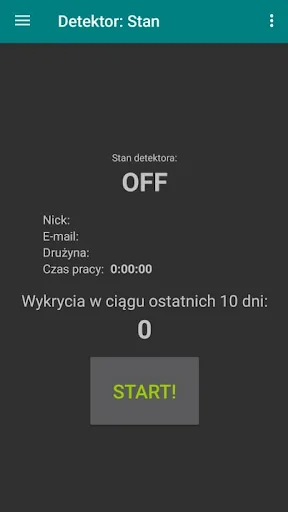
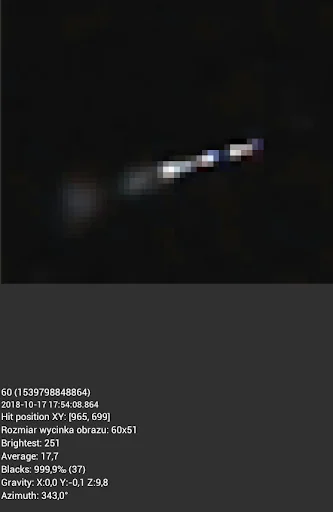
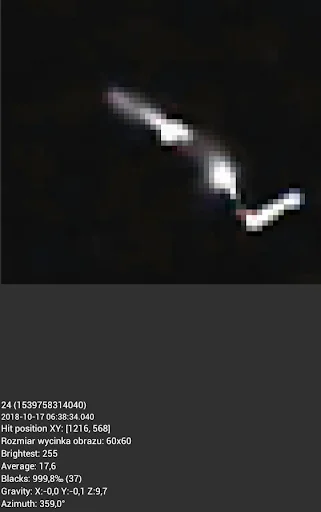
A large role in the CREDO project is the CREDO Detector mobile app, which uses the camera's matrix to register cosmic-ray particles. By creating a network of users around the globe, we get a cosmic-ray telescope the size of the whole Earth. All application code is public and available on our GitHub.
CREDO is an open Citizen Science collaborative project and all collected data are public. In the project participate schools and institutions from 5 continents. If you think your school should join the program, contact us at contact@credo.science. If you have an idea and desire to implement it, you are welcome to join us!
Comparable Android apps
The five apps in Education with the closest revenue to CREDO Detector. Click any to see its detail page.
Each forecast combines App Store rating, ratings count, monetisation model, pricing tier, IAP signals and ad-supported flag.
The base estimate is then multiplied by a per-category scaling factor learned from apps with founder-verified MRR.
Every number on this page comes from public APIs and bumetric's own snapshot history.
Full methodology covers input variables, accuracy bands per category and how we treat apps without comparable anchors.
See also the live data on CREDO Detector's tracker page for current rating, reviews and snapshot timeline.
Building something similar? Get a free AI audit with $-revenue forecasts for every recommendation.


 Learn Chinese with flashcards!
 Garg Classes
 Forensic Science
 Sky Academy Kanpur
 Python Sinhala