ML revenue forecast.
Calibrated against 63594 apps in this category.
Confidence band
±15%
High — many comparable apps with verified data
At a glance
Earns 3.5× more than the category median (206/mo).
Ranks #4,409 of 63,594 in Books & Reference (top 6.9% by revenue).
Launched Aug 22, 2018 · last updated Oct 13, 2025.
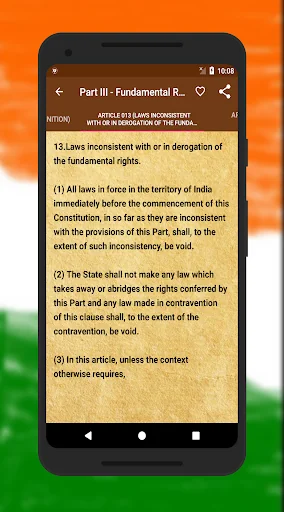
What the app looks like
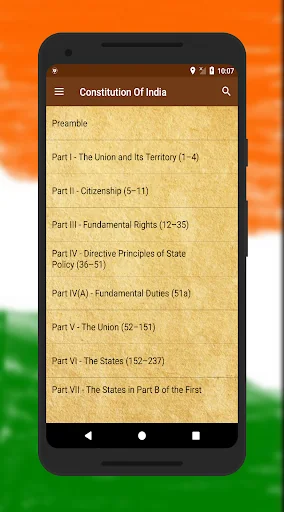
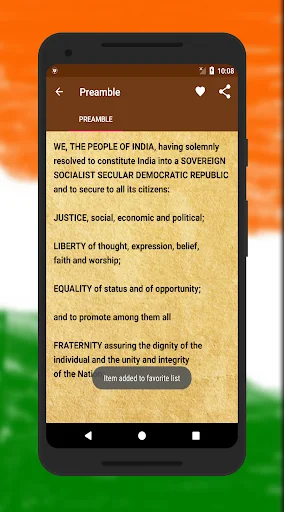
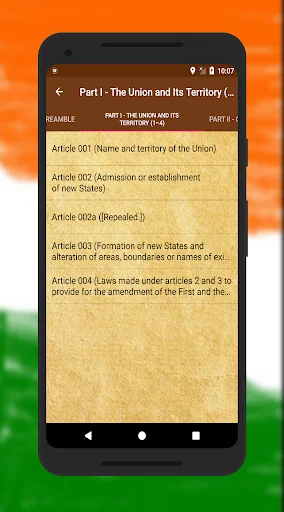
Live screenshots from the Play Store, captured by our snapshot worker. Tap any image to enlarge.
CrPC 1973 English Study Guide's revenue trajectory
Forecast revenue from snapshot history. Last 1 months.
Where CrPC 1973 English Study Guide sits in Books & Reference
Revenue distribution of 63594 comparable apps. CrPC 1973 English Study Guide highlighted.
CrPC 1973 English Study Guide vs comparable apps
Revenue trajectory side-by-side. Bold = CrPC 1973 English Study Guide, ghosted = peers.
App spec
Version
3.9.0
Last update
Oct 13, 2025
Launched
Aug 22, 2018
Price
Free
Monetization
Free
What CrPC 1973 English Study Guide actually does (from store listing)
Disclaimer: This application is not affiliated with or representative of any government entity. It is a private platform developed for Educational Purpose. Any information or services provided by this app are not endorsed or sanctioned by any government authority. Content source: https://lddashboard.legislative.gov.in/actsofparliamentfromtheyear/code-criminal-procedure-act-1973
The Code of Criminal Procedure (CrPC ) is the main legislation on the procedure for administration of substantive cr…
Disclaimer: This application is not affiliated with or representative of any government entity. It is a private platform developed for Educational Purpose. Any information or services provided by this app are not endorsed or sanctioned by any government authority. Content source: https://lddashboard.legislative.gov.in/actsofparliamentfromtheyear/code-criminal-procedure-act-1973
The Code of Criminal Procedure (CrPC ) is the main legislation on the procedure for administration of substantive criminal law in India. It was enacted in 1973 and came into force on 1 April 1974.[2] It provides the machinery for the investigation of crime, apprehension of suspected criminals, the collection of evidence, determination of guilt or innocence of the accused person and the determination of punishment of the guilty. Additionally, it also deals with public nuisance, prevention of offenses and maintenance of wife, child, and parents.
At present, the Act contains 484 Sections, 2 Schedules, and 56 Forms. The Sections are divided into 37 Chapters.
History
In medieval India, subsequent to the conquest by the Muslims, the Mohammedan Criminal Law came into prevalence. The British rulers passed the Regulating Act of 1773 under which a Supreme Court was established in Calcutta and later on at Madras and in Bombay. The Supreme Court was to apply British procedural law while deciding the cases of the Crown’s subjects. After the Rebellion of 1857, the crown took over the administration in India. The Criminal Procedure Code, 1861 was passed by the British parliament. The 1861 code continued after independence and was amended in 1969. It was finally replaced in 1972.
Classification of Offences under the Code
Cognizable and Non-cognizable Offences
Main article: Cognizable offence
Cognizable offences are those offences for which a police officer may arrest without court mandated warrant in accordance with the first schedule of the code. For non-cognizable cases the police officer may arrest only after being duly authorized by a warrant. Non-cognizable offences are, generally, relatively less serious offences than cognizable ones. Cognizable Offences reported under section 154 Cr.P.C while Non-Cognizable Offences reported under section 155 Cr.P.C. For Non-Cognizable Offences the Magistrate empowered to take cognizance under section 190 Cr.P.C. Under section 156(3) Cr.P.C the Magistrate is competent to direct the police to register the case, investigate the same and submit the challan/report for cancellation. (2003 P.Cr.L.J.1282)
Summons-Case and Warrant-Case
Under Section 204 of the code, a Magistrate taking cognizance of an offence is to issue summons for the attendance of the accused if the case is a summons case. If the case appears to be a warrant case, he may issue a warrant or summons, as he sees fit. Section 2(w) of the Code defines summons-case as, a case relating to an Offence, and not being a warrant-case. Section 2(x) of the Code defines warrant-case as, a case relating to an Offence punishable with death, imprisonment for life or imprisonment for a term exceeding two years.
Comparable Android apps
The five apps in Books & Reference with the closest revenue to CrPC 1973 English Study Guide. Click any to see its detail page.
Each forecast combines App Store rating, ratings count, monetisation model, pricing tier, IAP signals and ad-supported flag.
The base estimate is then multiplied by a per-category scaling factor learned from apps with founder-verified MRR.
Every number on this page comes from public APIs and bumetric's own snapshot history.
Full methodology covers input variables, accuracy bands per category and how we treat apps without comparable anchors.
See also the live data on CrPC 1973 English Study Guide's tracker page for current rating, reviews and snapshot timeline.
Building something similar? Get a free AI audit with $-revenue forecasts for every recommendation.

 Kamus Inggris
 Pismo Święte (wer. prosta)
 Hinos & Cânticos
 online Bibliotheek
 LOCVANI DA PSALMUNNI