What FFmpeg Media Encoder actually does (from store listing)
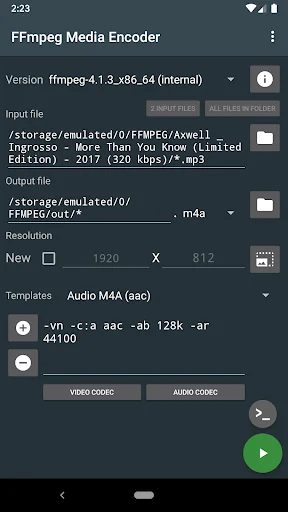
Convert audio and video directly on the device using FFmpeg http://ffmpeg.org/
FFmpeg is a set of open source libraries that allow you to record, convert digital audio and video recordings in various formats. It includes libavcodec, a library for encoding and decoding audio and video, and libavformat, a library for multiplexing and demultiplexing into a media container. The name comes from the name of the MPEG and FF expert group, meaning fast forward.
FFmpeg is already built into the progr…
Convert audio and video directly on the device using FFmpeg http://ffmpeg.org/
FFmpeg is a set of open source libraries that allow you to record, convert digital audio and video recordings in various formats. It includes libavcodec, a library for encoding and decoding audio and video, and libavformat, a library for multiplexing and demultiplexing into a media container. The name comes from the name of the MPEG and FF expert group, meaning fast forward.
FFmpeg is already built into the program and does not require downloading additional codecs.
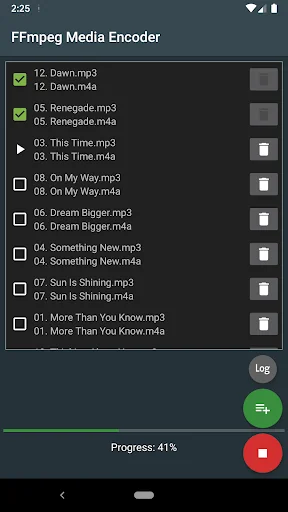
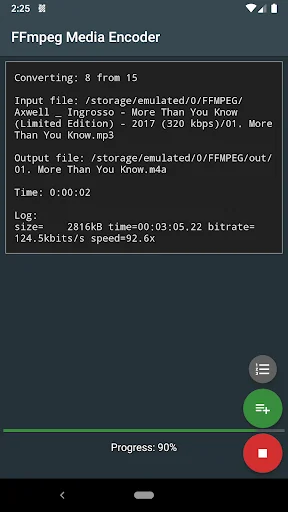
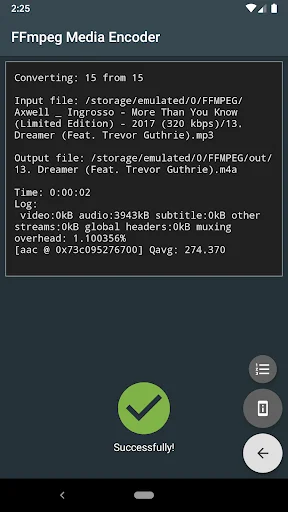
The conversion takes place directly on the device (the Internet is not required), and the conversion speed depends on the processor speed of the device.
Supports: MPEG4, h265, h264, mp3, 3gp, aac, ogg (vorbis and theora), opus, vp8, vp9 and many other formats (you will find the list in the app).
Requirements: Android 4.4 and the availability of the processor ARMv7, ARMv8, x86, x86_64.
More options can be found in the help pages for FFmpeg.
For Android 11 users: New rules require the application to use more confidential methods of working with files on your device. You will have to copy/move the input files to a shared folder, such as DCIM, Movie, Music, Download. Sorry for the inconvenience
Comparable Android apps
The five apps in Video Players & Editors with the closest revenue to FFmpeg Media Encoder. Click any to see its detail page.
Each forecast combines App Store rating, ratings count, monetisation model, pricing tier, IAP signals and ad-supported flag.
The base estimate is then multiplied by a per-category scaling factor learned from apps with founder-verified MRR.
Every number on this page comes from public APIs and bumetric's own snapshot history.
Full methodology covers input variables, accuracy bands per category and how we treat apps without comparable anchors.
See also the live data on FFmpeg Media Encoder's tracker page for current rating, reviews and snapshot timeline.
Building something similar? Get a free AI audit with $-revenue forecasts for every recommendation.


 BlackHole
 Video Editor - Crop & Trim mp4
 Jane
Jane
 Animated Text On Video
 Video Maker Photo With Song