What GitJournal - Notes with Git actually does (from store listing)
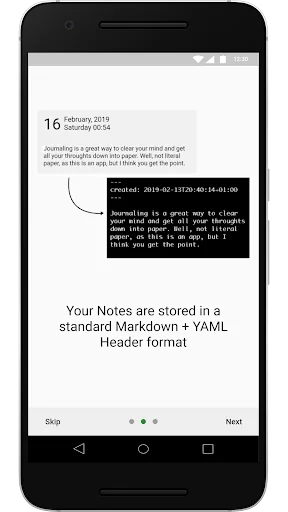
Git Journal is a note taking / journaling app built with privacy and data portability in mind. It stores all its notes in a standardised Markdown + YAML header format or plaintext. The notes are stored in a hosted Git Repo of your choice - GitHub / GitLab / Gitea / Gogs / Any Custom-provider.
Features -
- Offline First - All yours notes are available offline
- No Account Required
- Categorize your Notes with Folders
- Open source / Free Software / FOSS
- Can easily be extended and inte…
Git Journal is a note taking / journaling app built with privacy and data portability in mind. It stores all its notes in a standardised Markdown + YAML header format or plaintext. The notes are stored in a hosted Git Repo of your choice - GitHub / GitLab / Gitea / Gogs / Any Custom-provider.
Features -
- Offline First - All yours notes are available offline
- No Account Required
- Categorize your Notes with Folders
- Open source / Free Software / FOSS
- Can easily be extended and integrated with other Git tools
- Can also be used to manage Hugo / Jekyll / Gatsby websites
- No Ads
- Built with Flutter
Never need to import / export your notes, as you always have control of the data. Apps may come and go, but your notes will always be with you.
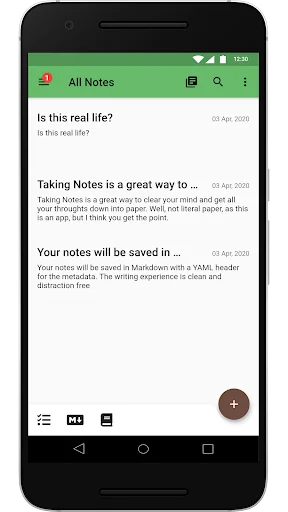
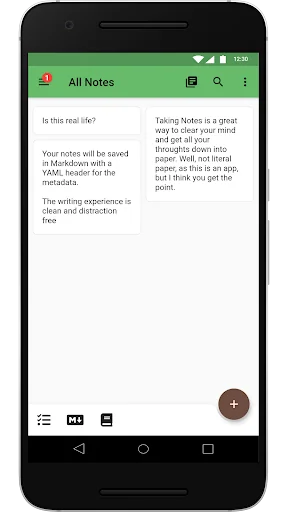
The app comes with a clean, easy to use interface designed to focus on just writing your journal entries without any distractions.
We have chosen Git as a backend as self-hosting a Git server is much simpler than almost any other software, additionally there are already many commercial providers of Git. So you can choose who you want to trust with your notes. We currently don't support encrypting the notes, but it's something we're actively working on.
Comparable Android apps
The five apps in Productivity with the closest revenue to GitJournal - Notes with Git. Click any to see its detail page.
Each forecast combines App Store rating, ratings count, monetisation model, pricing tier, IAP signals and ad-supported flag.
The base estimate is then multiplied by a per-category scaling factor learned from apps with founder-verified MRR.
Every number on this page comes from public APIs and bumetric's own snapshot history.
Full methodology covers input variables, accuracy bands per category and how we treat apps without comparable anchors.
See also the live data on GitJournal - Notes with Git's tracker page for current rating, reviews and snapshot timeline.
Building something similar? Get a free AI audit with $-revenue forecasts for every recommendation.



 My Lodha
 Simple Calendar Widget
 Focus Plus - Limit phone usage
 POSMOVI Electronic billing
 DAILY Business UP™