What Immunology & Virology actually does (from store listing)
Big scientific encyclopedia "Immunology and Virology".
The functioning of the immune system is studied by the science of immunology. Immunology studies the body's reactions to antigens.
The immune system protects the body from infections, toxins, and cancer cells. The immune system must recognize a wide range of pathogens, from viruses to multicellular worms, and distinguish them from the body's own healthy tissues.
Immunological memory forms the basis of vaccination and allows the body…
Big scientific encyclopedia "Immunology and Virology".
The functioning of the immune system is studied by the science of immunology. Immunology studies the body's reactions to antigens.
The immune system protects the body from infections, toxins, and cancer cells. The immune system must recognize a wide range of pathogens, from viruses to multicellular worms, and distinguish them from the body's own healthy tissues.
Immunological memory forms the basis of vaccination and allows the body to develop a stronger immune response to a pathogen after the first encounter with it.
Immune system dysfunctions lead to autoimmune diseases, inflammatory diseases and cancer. When the immune system is weak, there are immunodeficiency states that make the body more vulnerable to infections. Immunodeficiency can be either congenital due to genetic abnormalities or acquired, for example, as a result of HIV infection or taking immunosuppressive drugs.
Antibodies - the globular proteins of blood plasma, designed to neutralize the cells of pathogens and viruses, protein poisons. Each antibody recognizes an antigen, and within a given antigen - a specific section of it, an epitope. Antibodies can neutralize them, or attract phagocytes to destroy them.
Virology studies viruses and virus-like agents. The main attention is paid to the structure of viruses, their classification and evolution, methods of infection of host cells, their interaction with the physiology and immunity of the host organism, and diseases. Virology is a branch of microbiology. Viruses can cause viral diseases and tumors.
Thanks to the mass vaccination of the population, smallpox was eliminated. There are a number of viral diseases that are incurable at the present stage of the development of science, the most famous of which is HIV infection.
Serology is the science of the properties of blood serum. Typically, serology is understood as the section of immunology that studies the interaction of serum antibodies with antigens.
Serological reactions can be direct - agglutination, passive hemagglutination, precipitation, etc., and indirect - a neutralization reaction, a hemagglutination inhibition reaction.
Complex serological reactions are composed of several "simple" ones: bacteriolysis, complement fixation reaction, etc.
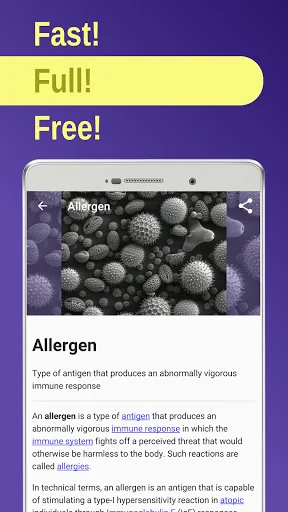
Allergy is a typical immunopathological process, expressed by the hypersensitivity of the body's immune system with repeated exposure of the allergen to the body previously sensitized by this allergen. Symptoms: pain in the eyes, swelling, runny nose, hives, sneezing, coughing, etc.
A food allergy is an abnormal immune response to food. Symptoms of an allergic reaction usually last from a few minutes to several hours. When symptoms are very severe, anaphylactic shock can occur.
Malignant tumor is extremely dangerous for the life of the body. Malignant epithelial tumors are called cancer, this term can mean chorionepithelioma, endothelioma, sarcoma, etc.
Malignant neoplasm is characterized by the appearance of uncontrollably dividing cells capable of invasion of adjacent tissues and metastasis to distant organs. The disease is associated with impaired cell proliferation and differentiation due to genetic disorders.
The development of drugs and methods for the treatment of malignant tumors is an important and still unsolved scientific problem.
This dictionary free offline:
• contains over 4500 definitions of characteristics and terms;
• ideal for professionals and students;
• advanced search function with autocomplete - search will start and predict word as you type;
• voice search;
• work offline - database packaged with the app, no data costs incurred when searching;
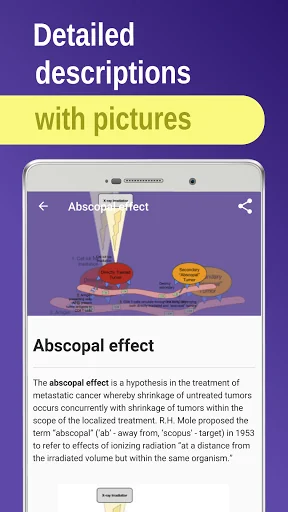
• includes hundreds of examples to illustrate the definitions;
• is an ideal app for quick reference or to learn more about the immunology.
Immunology is a complete offline free handbook of terminology, covers the most important terms and concepts.
Comparable Android apps
The five apps in Books & Reference with the closest revenue to Immunology & Virology. Click any to see its detail page.
Each forecast combines App Store rating, ratings count, monetisation model, pricing tier, IAP signals and ad-supported flag.
The base estimate is then multiplied by a per-category scaling factor learned from apps with founder-verified MRR.
Every number on this page comes from public APIs and bumetric's own snapshot history.
Full methodology covers input variables, accuracy bands per category and how we treat apps without comparable anchors.
See also the live data on Immunology & Virology's tracker page for current rating, reviews and snapshot timeline.
Building something similar? Get a free AI audit with $-revenue forecasts for every recommendation.


 DaKanji
 Thousand Questions
 Evangélium365
 Voermol
 كتاب جامع الدروس العربية