What Pedestrian navigator actually does (from store listing)
This app is a voice-based navigator.
"I'm going home" is primarily intended for trekking enthusiasts, since it's
a navigator for cross-country conditions. If you are afraid of getting lost
in the woods, in a desert or swamp, this is the app for you. If you like
fishing or taking your ATV out and exploring, this app will also be a great
asset for you.
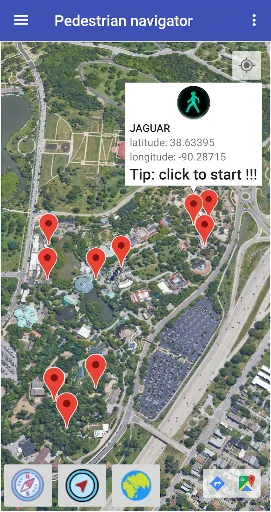
Just set a waypoint or stick to the route you want to use for your return
(like in that tale about Hansel and Gretel) - and the app will…
"I'm going home" is primarily intended for trekking enthusiasts, since it's
a navigator for cross-country conditions. If you are afraid of getting lost
in the woods, in a desert or swamp, this is the app for you. If you like
fishing or taking your ATV out and exploring, this app will also be a great
asset for you.
Just set a waypoint or stick to the route you want to use for your return
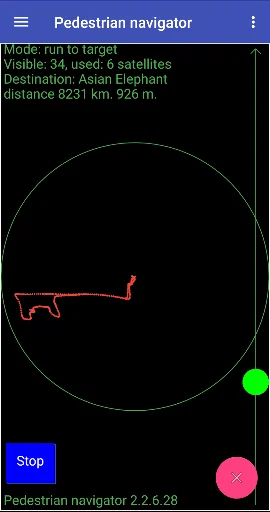
(like in that tale about Hansel and Gretel) - and the app will guide you
back or to your waypoint, telling you where to turn with voice.
What is the difference from car navigators? It's simple - you need a map
for a car navigator. There are no maps or roads in a forest. The app does
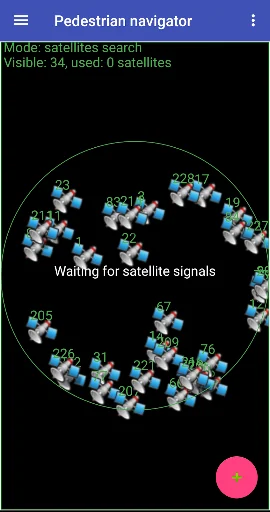
not use maps for navigation, just the GPS signal and your waypoints used
for plotting your route. You can walk at any speed, the accuracy of
measurement will remain the same. Why does the app use voice instructions?
It's simple as well - for keeping your eyes and hands free for more
important things. If you keep looking at your car navigators' screen, one
or both of your hands must hold it, and you can't look in front of you,
which is important when you are out in the woods.
How different is it from the first version of "I'm going home"? The main
difference is the possibility to use the same route for your return, and
full voicing of the distance walked, remaining distance, elapsed time,
remaining time and the TTS system.
Does the app require an Internet connection? No, navigation does not
require an Internet connection, but it is used for some secondary functions.
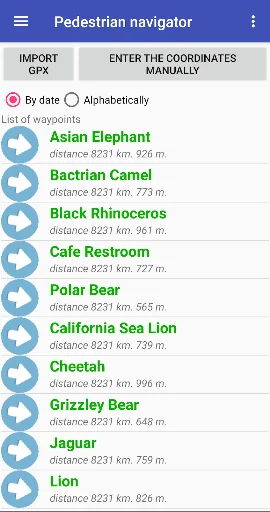
How many routes or waypoints can it save? As many as needed and possible,
so it will only depend on the amount of memory your device has.
Comparable Android apps
The five apps in Maps & Navigation with the closest revenue to Pedestrian navigator. Click any to see its detail page.
Each forecast combines App Store rating, ratings count, monetisation model, pricing tier, IAP signals and ad-supported flag.
The base estimate is then multiplied by a per-category scaling factor learned from apps with founder-verified MRR.
Every number on this page comes from public APIs and bumetric's own snapshot history.
Full methodology covers input variables, accuracy bands per category and how we treat apps without comparable anchors.
See also the live data on Pedestrian navigator's tracker page for current rating, reviews and snapshot timeline.
Building something similar? Get a free AI audit with $-revenue forecasts for every recommendation.


 Curb - Request & Pay for Taxis
 Ventra
 Auto Bluetooth
 Софбус 24
 MyPatrol