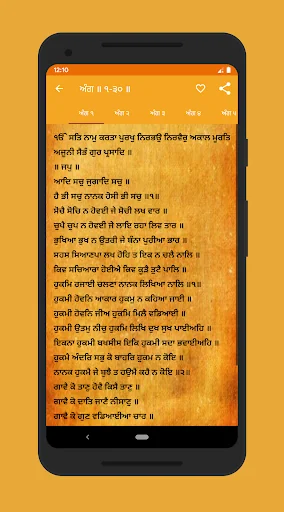
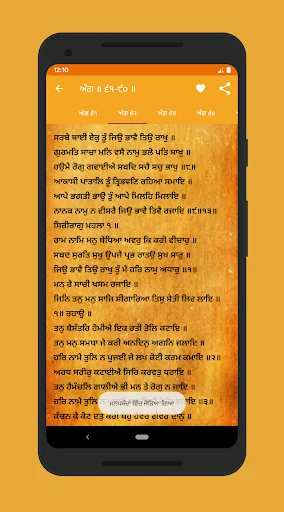
Guru Granth Sahib (Punjabi (Gurmukhi): (Gurū Gra°th Sāhib Jī), Punjabi pronunciation: [ɡʊɾu ɡɾəntʰ sɑhɪb], /ˈɡʊəruː ɡrʌnt səˈhɪb/) is the central religious scripture of Sikhism, regarded by Sikhs as the final, sovereign and eternal living Guru following the lineage of the ten human Gurus of the religion, of whom six contributed the bulk. The Adi Granth, the first rendition, was compiled by the fifth Sikh Guru, Guru Arjan (1563–1606). Guru Gobind Singh, the tenth Sikh Guru, did not add any of his own hymns; however, he added all 115 hymns of Guru Tegh Bahadur, the ninth Sikh Guru, to the Adi Granth and affirmed the text as his successor. This second rendition became known as Guru Granth Sahib. After Guru Gobind Singh died, Baba Deep Singh and Bhai Mani Singh prepared many copies of the work for distribution.
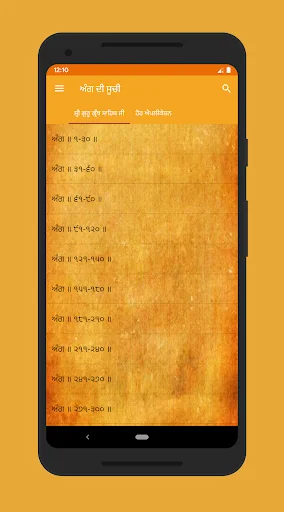
The text consists of 1430 angs (pages) and 6,000 śabads (line compositions), which are poetically rendered and set to a rhythmic ancient north Indian classical form of music. The bulk of the scripture is divided into thirty-one rāgas, with each Granth rāga subdivided according to length and author. The hymns in the scripture are arranged primarily by the rāgas in which they are read. The Guru Granth Sahib is written in the Gurmukhī script, in various languages, including Lahnda (Western Punjabi), Braj Bhasha, Khariboli, Sanskrit, Sindhi, and Persian. Copies in these languages often have the generic title of Sant Bhasha.
Guru Granth Sahib was composed predominantly by six Sikh Gurus: Guru Nanak, Guru Angad, Guru Amar Das, Guru Ram Das, Guru Arjan, and Guru Teg Bahadur. It also contains the traditions and teachings of fourteen Hindu Bhakti movement sants (saints), such as Ramananda, Kabir and Namdev among others, and one Muslim Sufi saint: Sheikh Farid.
The vision in the Guru Granth Sahib is of a society based on divine justice without oppression of any kind. While the Granth acknowledges and respects the scriptures of Hinduism and Islam, it does not imply a moral reconciliation with either of these religions. It is installed in a Sikh gurdwara (temple); all Sikhs bow or prostrate before it on entering such a temple. The Granth is revered as eternal gurbānī and the spiritual authority in Sikhism.
Source: https://en.wikipedia.org/wiki/Guru_Granth_Sahib
Image source : originally posted to Flickr (https://commons.wikimedia.org/wiki/Flickr) as _DSC0172-01 (http://flickr.com/photos/35296348@N00/219784401)
Comparable Android apps
The five apps in Books & Reference with the closest revenue to Shri Guru Granth Sahib Ji Bani. Click any to see its detail page.
Each forecast combines App Store rating, ratings count, monetisation model, pricing tier, IAP signals and ad-supported flag.
The base estimate is then multiplied by a per-category scaling factor learned from apps with founder-verified MRR.
Every number on this page comes from public APIs and bumetric's own snapshot history.
Full methodology covers input variables, accuracy bands per category and how we treat apps without comparable anchors.
See also the live data on Shri Guru Granth Sahib Ji Bani's tracker page for current rating, reviews and snapshot timeline.
Building something similar? Get a free AI audit with $-revenue forecasts for every recommendation.


 NEET Exam NEET Notes NEET Que
 NKJV Holy Bible Offline Audio
 رواية كبرياء عاشقة
 Tipitaka.app Chatta Sangayana
 Fatiha Aur Esal E Sawab Hindi