32
BU Score
Emerging
Low Frequency Detector
✍️ bumetric analysis
“
Low Frequency Detector is an iOS app from TOON,LLC in the Utilities category, currently rated 2.8★ across 6 ratings. Initial signal reads as mixed reviews: supporters praise core features while critics cite stability and value gaps.
Our BU Score puts it at 32: Emerging (early traction worth watching). For a Utilities app, that means early traction worth watching.
Track changes month-over-month in the Performance section below: live snapshot history and revenue forecast included.
📊 Performance Tracking LIVE
Loading…
Rating
—
Reviews
—
Forecast Revenue / mo
—
Snapshots tracked
0
since first record
Range:
💰 Forecast Revenue / mo
MODELRevenue forecast computed from BU's 234 trigger model on each snapshot. Calibrated against ground-truth from 58 verified-revenue apps.
🔬Forecast Breakdown — Why This Estimate?Top 5 of 5 triggers
Our ML model uses 200+ signals from public data. These are the most influential for this app:
| Paid app ($9.99)METRIC | +$2,800 | |
| Below-average rating (2.8★)METRIC | −$1,500 | |
| Mature app (9y old)METRIC | +$1,500 | |
| Single-language (English only)METRIC | −$400 | |
| Pre-traction phase (6 ratings)METRIC | −$300 |
METRIC = structural app data · REVIEW = mined from user reviews · ✓ VERIFIED = Stripe-verified anchor (TrustMRR)
📈 Reviews Growth
LIVECumulative review count from first BU snapshot. Each point = a tracked update.
⭐ Rating Trend
LIVEAverage rating evolution. Updates with each new review batch.
🗓️ Snapshot Timeline
HISTORYEach bar shows a tracked update and the metric delta from the previous snapshot.
App Specs
🔐 Own this app? Claim & verify MRR →💾 614 KB🔞 4+📱 iOS 26.2+🔖 v8.0🔄 updated 2mo ago🌐 EN📂 Utilities💰 Paid🚀 Launched 2017 (9y old)
📝 About this app
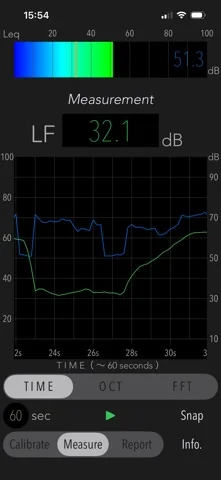
"Low Frequency Detector" is an acoustic measurement tool for detecting low-frequency sounds that is hard to hear in normal situation.
The human ear is not sensitive enough to low-frequency sounds. If you are exposed to noise from nearby construction or factories without realizing it, you may feel discomfort or a sense of pressure. In such cases, you can use this app to check what kind of low-frequency noise is present.
Generally, low-frequency sounds is a sound wave ranging from 1Hz to 100Hz. Depending on its frequency component and sound level, the degree of influence on the human body and the noise sensation is different.
This app allows you to examine the frequency component of low-frequency sounds by 1/3 octave band analysis and FFT analysis.
Features:
- Low-frequency power level measurement less than 100Hz (LF Level): Flat characteristic, Updating indication of measurement period 1 sec.
- Power level measurement in the audible band (Leq): Flat characteristic, Updating indication of measurement period 200ms.
- 1/3 octave band analysis (OCT)
- FFT analysis (FFT)
- Time course graph (TIME)
- Snapshot (Snap) on the measurement display screen.
- Report function (Report): Analysis report of a peak LF Level with TIME, OCT and FFT.
- Measurement time: up to 60 sec
Functions:
The measurement analysis is performed in the following step. Be sure to set the measurement conditions in Step-1 once before starting the sound measurement.
1) Calibration (Calibrate): The reference signal (1kHz sine wave) is output to determine the reference noise level for the low-frequency component. If the volume level of iPhone is set to about 20-50%, the calibration will automatically adjust it to the optimum volume level for the reference signal.
2) Measurement (Measure): Analyze a power level of low-frequency sounds.
- LF Level (dB): Low-frequency power level less than 100Hz.
- Leq (dB): Sound power level with the frequency weight characteristic Z (Flat) of the audible band.
3) Measurement display: It can select either 1/3 octave band frequency analysis, FFT analysis or Time course graph. They are updated in real time.
4) Report: Measurement result report. It is effective when measuring for 10 seconds or more.
# Time course graph: TIME
- Low-frequency (LF) Level (dB): Time course graph with peak level noise level judgment (RED-very noisy, YELLOW-noisy, GREEN-normal) at the peak level.
- LF max (dB): maximum dB value of low frequency.
# Frequency response graph: OCT, FFT
- OCT Band LF max (dB): maximum dB value in 1/3 octave band at LF max observation.
- Max Level Frequency (Hz): peak frequency at LF max observation.
Notes:
- The sound measurement of the low-frequency range is a level difference with respect to the reference signal, which indicates the relative power level.
- The reference signal is output during calibration and sound level measurement.
- Do not change the volume level of iPhone after the calibration.
- White line in the OCT and FFT modes indicates frequency characteristics in frequency weight correction of G characteristics.
- Since iPhone's built-in microphone has a lower sensitivity on the very low frequency range, it is not recommended to measure a huge volume sound near a very loud noise source.
- Since it takes a while for the observation value to stabilize immediately after the start of measurement, the maximum value is calculated from about 2 seconds later.
- In the case high power of 1kHz component is included in the measured noise source, the precision of measured value by this app largely decreases.
- Sudden noise or impulsive sounds are not low frequency noises in general.
- The previous calibration information can be maintained internally.
- The analysis results may vary due to individual differences in iPhone devices.
- The authorization to access built-in microphone and Photos will be confirmed by iOS system at first access.
Please visit our iOS app support page for more information.
The human ear is not sensitive enough to low-frequency sounds. If you are exposed to noise from nearby construction or factories without realizing it, you may feel discomfort or a sense of pressure. In such cases, you can use this app to check what kind of low-frequency noise is present.
Generally, low-frequency sounds is a sound wave ranging from 1Hz to 100Hz. Depending on its frequency component and sound level, the degree of influence on the human body and the noise sensation is different.
This app allows you to examine the frequency component of low-frequency sounds by 1/3 octave band analysis and FFT analysis.
Features:
- Low-frequency power level measurement less than 100Hz (LF Level): Flat characteristic, Updating indication of measurement period 1 sec.
- Power level measurement in the audible band (Leq): Flat characteristic, Updating indication of measurement period 200ms.
- 1/3 octave band analysis (OCT)
- FFT analysis (FFT)
- Time course graph (TIME)
- Snapshot (Snap) on the measurement display screen.
- Report function (Report): Analysis report of a peak LF Level with TIME, OCT and FFT.
- Measurement time: up to 60 sec
Functions:
The measurement analysis is performed in the following step. Be sure to set the measurement conditions in Step-1 once before starting the sound measurement.
1) Calibration (Calibrate): The reference signal (1kHz sine wave) is output to determine the reference noise level for the low-frequency component. If the volume level of iPhone is set to about 20-50%, the calibration will automatically adjust it to the optimum volume level for the reference signal.
2) Measurement (Measure): Analyze a power level of low-frequency sounds.
- LF Level (dB): Low-frequency power level less than 100Hz.
- Leq (dB): Sound power level with the frequency weight characteristic Z (Flat) of the audible band.
3) Measurement display: It can select either 1/3 octave band frequency analysis, FFT analysis or Time course graph. They are updated in real time.
4) Report: Measurement result report. It is effective when measuring for 10 seconds or more.
# Time course graph: TIME
- Low-frequency (LF) Level (dB): Time course graph with peak level noise level judgment (RED-very noisy, YELLOW-noisy, GREEN-normal) at the peak level.
- LF max (dB): maximum dB value of low frequency.
# Frequency response graph: OCT, FFT
- OCT Band LF max (dB): maximum dB value in 1/3 octave band at LF max observation.
- Max Level Frequency (Hz): peak frequency at LF max observation.
Notes:
- The sound measurement of the low-frequency range is a level difference with respect to the reference signal, which indicates the relative power level.
- The reference signal is output during calibration and sound level measurement.
- Do not change the volume level of iPhone after the calibration.
- White line in the OCT and FFT modes indicates frequency characteristics in frequency weight correction of G characteristics.
- Since iPhone's built-in microphone has a lower sensitivity on the very low frequency range, it is not recommended to measure a huge volume sound near a very loud noise source.
- Since it takes a while for the observation value to stabilize immediately after the start of measurement, the maximum value is calculated from about 2 seconds later.
- In the case high power of 1kHz component is included in the measured noise source, the precision of measured value by this app largely decreases.
- Sudden noise or impulsive sounds are not low frequency noises in general.
- The previous calibration information can be maintained internally.
- The analysis results may vary due to individual differences in iPhone devices.
- The authorization to access built-in microphone and Photos will be confirmed by iOS system at first access.
Please visit our iOS app support page for more information.
🆕 What's New · v8.0
- Improved internal processing and performance.
- Requires iOS 26.2 or later.
Profile & Insights
Everything we know — and don't — about this app and its company.
Identification
- App name
- Low Frequency Detector
- Developer
- TOON,LLC
- Bundle ID
- com.toon-llc.LowFreq
- App Store URL
- Open in App Store
- Category
- Utilities
- Content rating
- 4+
- Languages
- EN
Company
- Website
- toon-llc.com
- Tagline
- Not found
- Description
- Not found
- Founded
- Not found
- HQ / Address
- Not found
- Employees
- Not found
- Logo
- Not found
Revenue
- Verified revenue / mo
- Not found
- AI revenue estimate / mo
- Not found
- AI annual estimate
- Not found
- ML model estimate / mo
- $86/mo
- Top-grossing rank
- Outside top 100 in US Utilities
- All-time revenue
- Not found
- Pricing
- Not found
Founder
- Name
- Not found
- X / Twitter
- Not found
- Not found
- GitHub
- Not found
- X followers
- Not found
- Public statements
- Not found
Funding
- Total raised
- Not found
- Last round
- Not found
- Investors
- Not found
- Crunchbase
- Not found
- AngelList
- Not found
Press & Links
- Articles found
- Not found
- Listed on
- Not found
- Blog
- Not found
- Press / News
- Not found
Contacts & Socials
- Socials
- Not found
- Not found
- Phone
- Not found
- Contact page
- Not found
- About page
- Not found
⭐Recent App Store Reviews3 latest · avg 4.33★ · 33.3% 5★ · 0% 1★
5★1 (33%)
4★2 (67%)
3★0 (0%)
2★0 (0%)
1★0 (0%)
+0 ratings/week
Praise: best ×1
Top positive
★★★★☆ Pretty good
This app isn’t as intuitive as other noise detection apps. You have to tune it first by adjusting the volume on your phone, as it sends out a reference signal. The other thing that is not intuitive is it doesn’t show you a live readout of d…
★★★★☆ Works best between 30 Hz and 110 Hz
It cannot detect 120 Hz or above because it is outside the range, and 20 Hz and below seems to get lost in the background noise. Both 30 Hz and 110 Hz are detected.…
Top negative
★★★★☆ Pretty good
This app isn’t as intuitive as other noise detection apps. You have to tune it first by adjusting the volume on your phone, as it sends out a reference signal. The other thing that is not intuitive is it doesn’t show you a live readout of d…
★★★★☆ Works best between 30 Hz and 110 Hz
It cannot detect 120 Hz or above because it is outside the range, and 20 Hz and below seems to get lost in the background noise. Both 30 Hz and 110 Hz are detected.…
📈Ratings growth6 ratings+500% lifetimeShow 3-year history estimate ▾
Tracked (5 weeks) Pre-tracking estimate (37 weeks) · model-based, ±5% noise · anchored to release date and current value
🌍Geographic ReachNot ranked
This app is currently outside the top 100 grossing in all 9 countries we monitor (US, UK, DE, FR, JP, CA, AU, BR, IN). Niche or new apps often launch this way — popularity rankings appear once daily revenue clears the regional threshold.
Profile is built from iTunes Lookup + developer site scrape + ML revenue model. Empty fields show "Not found" — additional sources (Crunchbase, X, IndieHackers, Acquire.com) coming.
Full revenue analysis
Read the article-style breakdown for Low Frequency Detector: category rank, percentile, growth signal, comparable apps, and how the forecast is calibrated against verified-MRR anchors in this niche.
